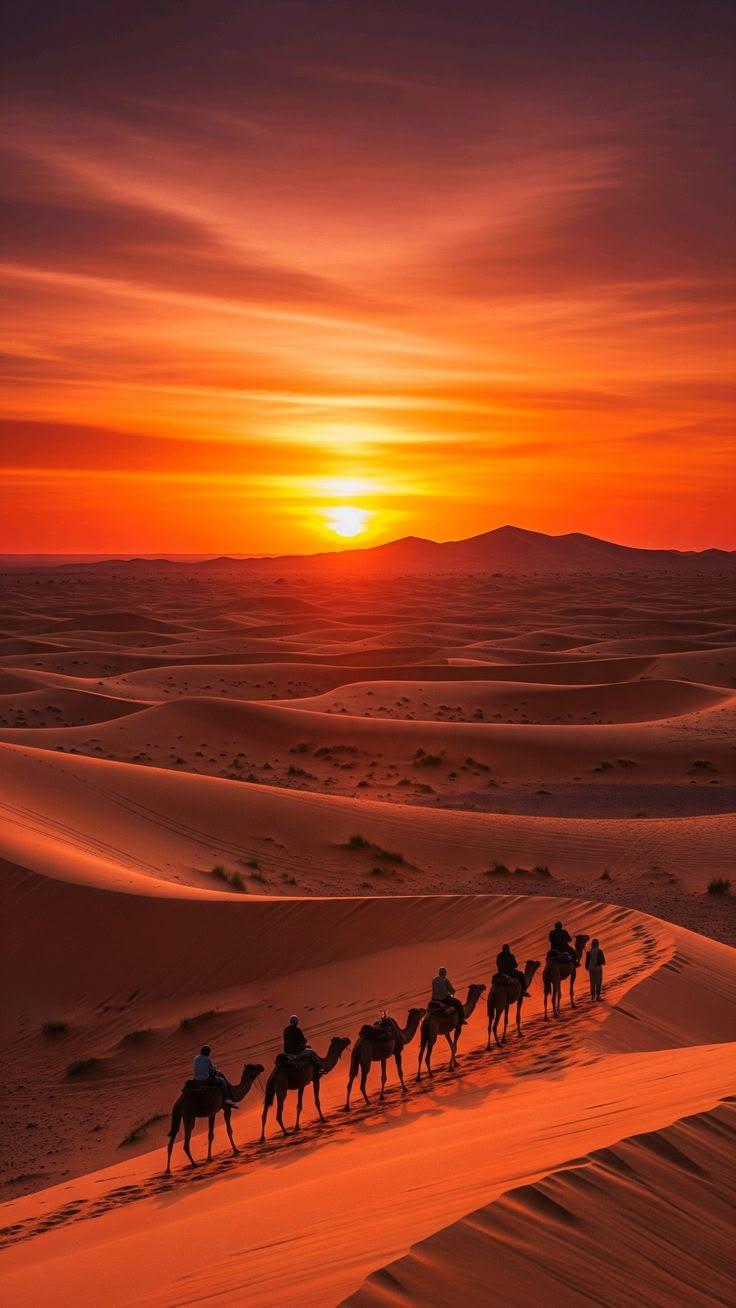
Southern Morocco
Sahara Desert
The largest hot desert on earth, and the part of it that belongs to Morocco.
- Best time to visit
- October to April, with March and October the most comfortable.
- Ideal for
- Adventure travellers, photographers, stargazers, slow travel
Introduction
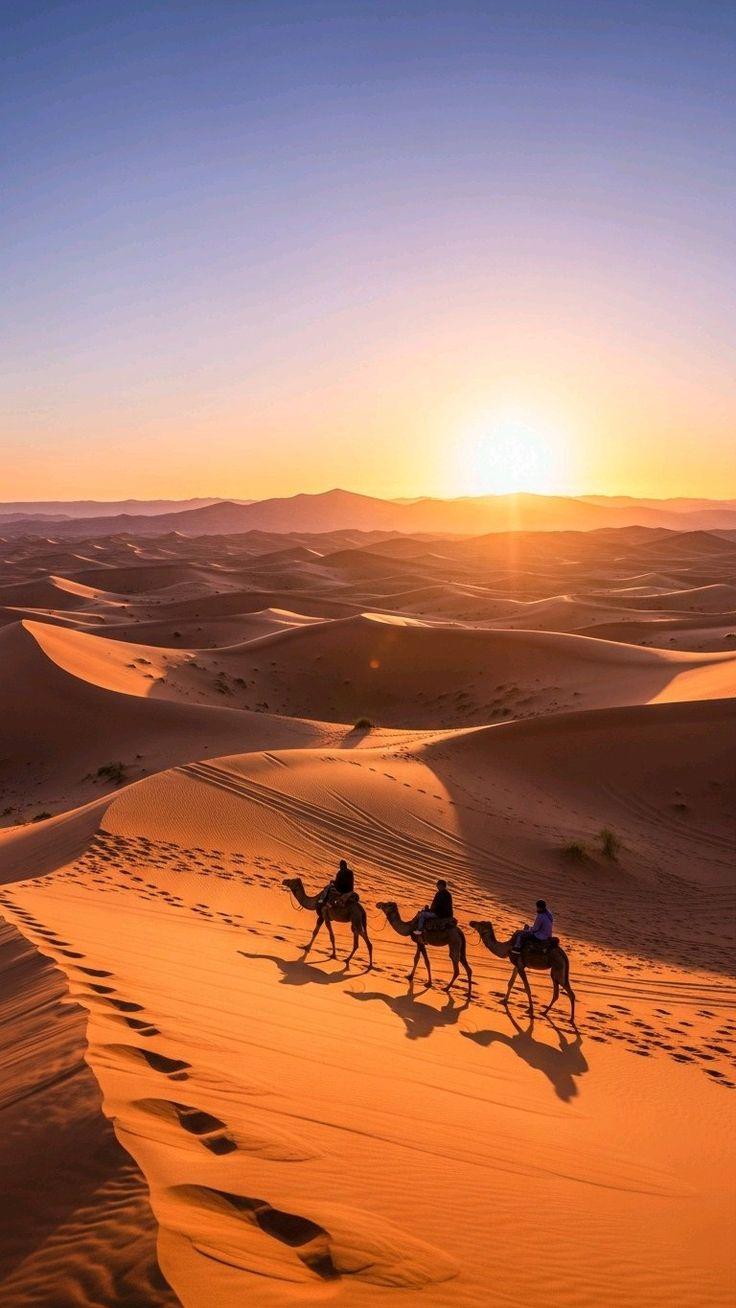
The Sahara covers most of North Africa, and Morocco holds its north-western corner. What that means in practice is two great dune fields — Erg Chebbi near Merzouga and Erg Chigaga beyond M'Hamid — separated by hundreds of kilometres of stone plateau, dry riverbeds, oasis valleys and volcanic hills.
Most of the Moroccan Sahara is not sand at all. Understanding that changes the trip: the sand seas are the destination, but the drive there through the hamada, the palm valleys and the fortified ksour is a large part of what you have come to see.
Why visit
- 01
The scale is impossible to convey in photographs and immediately obvious in person.
- 02
Silence: away from any road, the desert is quieter than almost anywhere else you will stand.
- 03
It is culturally rich, not empty — nomadic Amazigh, Gnaoua and oasis-farming traditions are all alive here.
Things to see
- Erg Chebbi, the dune sea at Merzouga
- Erg Chigaga, larger, wilder and further from any road
- The Draa Valley and its chain of ksour
- The Todra and Dades gorges on the approach
- Fossil beds around Erfoud, laid down when this was seabed
- Oasis villages and their irrigation systems
Things to do
- Spend at least one night in a desert camp
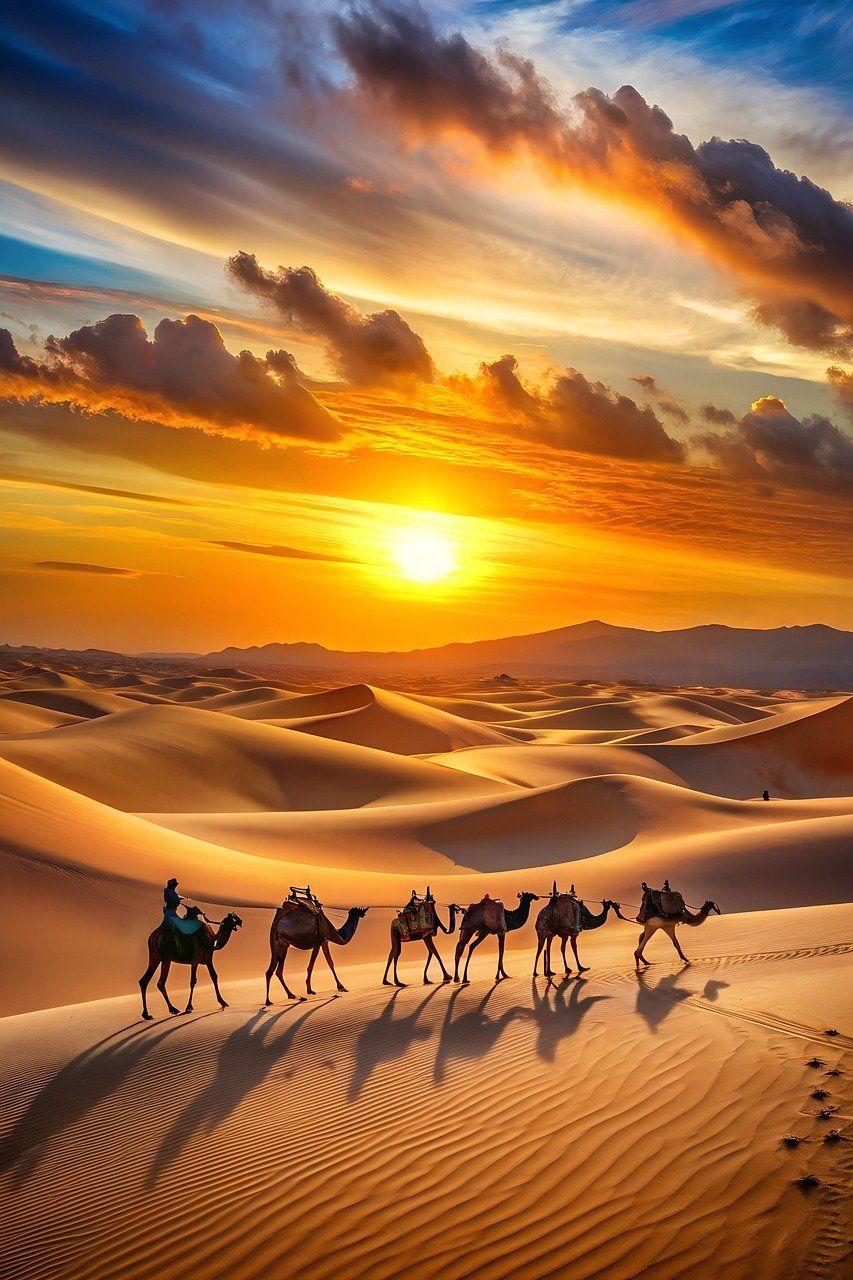
- Cross a section of dunes by camel
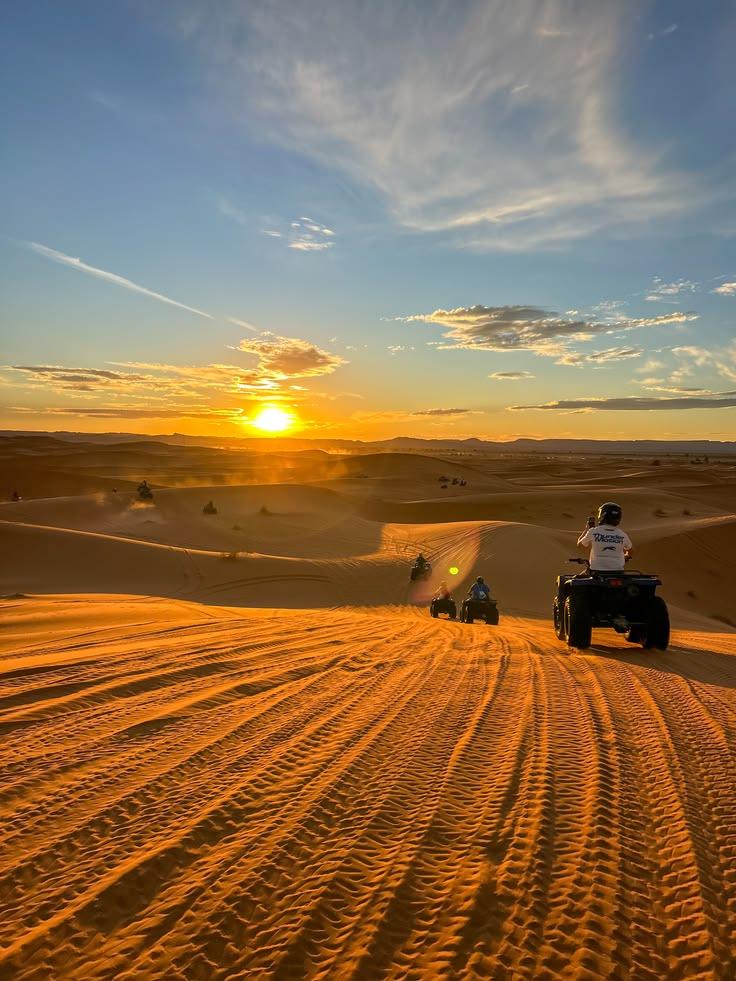
- Take a 4x4 further out, where the tracks stop
- Learn how a khettara underground water channel works
- Watch the stars come out with no artificial light anywhere
- Visit a fossil workshop in Erfoud
Local experiences
- A night with no artificial light in any direction
- Amazigh drumming and singing around a fire
- Tea with a nomad family in their tent
- Sunrise from the top of a dune, alone
Food
Food
Desert food is built around what keeps: dates, bread, olive oil, dried meat, and vegetables from the oasis gardens. Meals are cooked slowly over coals — tagines, harira soup, and medfouna baked in hot sand. Tea is constant and functions as hospitality, hydration and punctuation to the day.
Culture
Culture
The Moroccan Sahara is Amazigh country with strong sub-Saharan and Arab influences layered on top, the result of a thousand years as a trade corridor. Salt, gold and books moved along these routes, and the fortified ksour that line the valleys were built to protect them.
Best highlights
- 01
A night under the desert sky
- 02
The dune fields of Erg Chebbi and Erg Chigaga
- 03
The Draa Valley ksour
- 04
Nomadic hospitality
Popular Destinations
Photo gallery
Experiences that include this destination
This destination is not part of a fixed itinerary yet — we can build a private journey around it for you.
Popular Destinations
Explore other destinations
Start Planning
Your Morocco starts with a message
Tell us your dates and what you hope to see. We will send back a route that actually works — realistic drives, real places, and time to enjoy them.