Fes is the harder of the two great Moroccan medinas, and the more rewarding. It is also the one that most repays a guide on the first day.
Why you need a guide on day one
Fes el-Bali has something in the region of nine thousand lanes, very few street signs, and a geometry that defeats phone maps — the walls are high, the lanes are covered in places, and GPS drifts.
One guided day teaches you the main arteries, the gates and the landmarks. After that, wandering alone is the best thing you can do in Fes, and you will be able to find your way back. Without that first day, most people spend three days mildly lost and never relax.
The tanneries: go up, not in
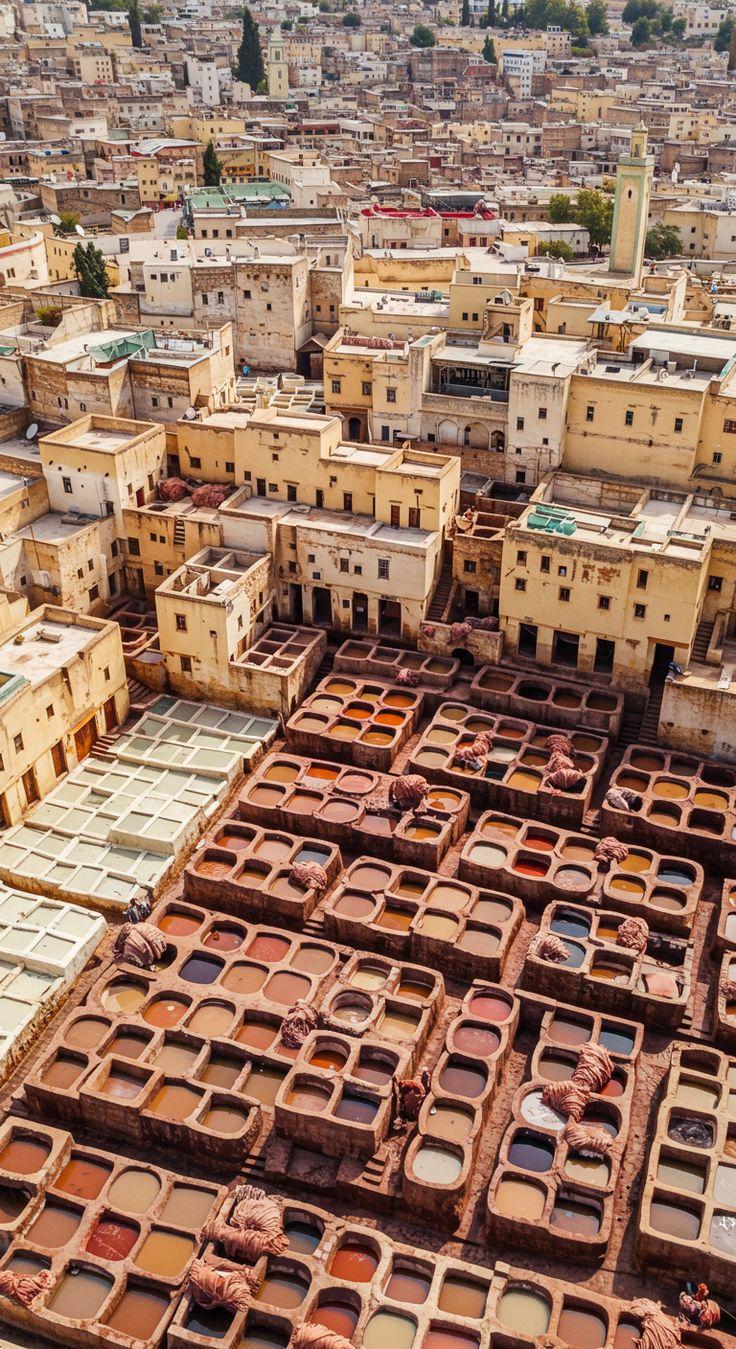
The Chouara tanneries are viewed from the terraces of the leather shops that surround them. There is no charge to go up; you will be shown the goods on the way down, which is the arrangement, and there is no obligation to buy anything.
Go in the morning, when the dyers are actually working the pits. Someone will hand you a sprig of mint at the door — take it, and hold it to your face. The process uses pigeon droppings and lime, and it has not changed in nine centuries.
The madrasas and Al Quaraouiyine
Al Quaraouiyine was founded in 859 by Fatima al-Fihri and is recognised as the oldest continuously operating degree-granting institution in the world. As an active mosque it is closed to non-Muslim visitors, though you can see a good deal from the doorways.
The madrasas, which were student residences, are fully open — and they hold the same craftsmanship. The Bou Inania and Al Attarine courtyards are among the finest rooms in the Islamic world: carved cedar above cut plaster above zellige, with no flat surface left plain.
The crafts are workplaces, not shops
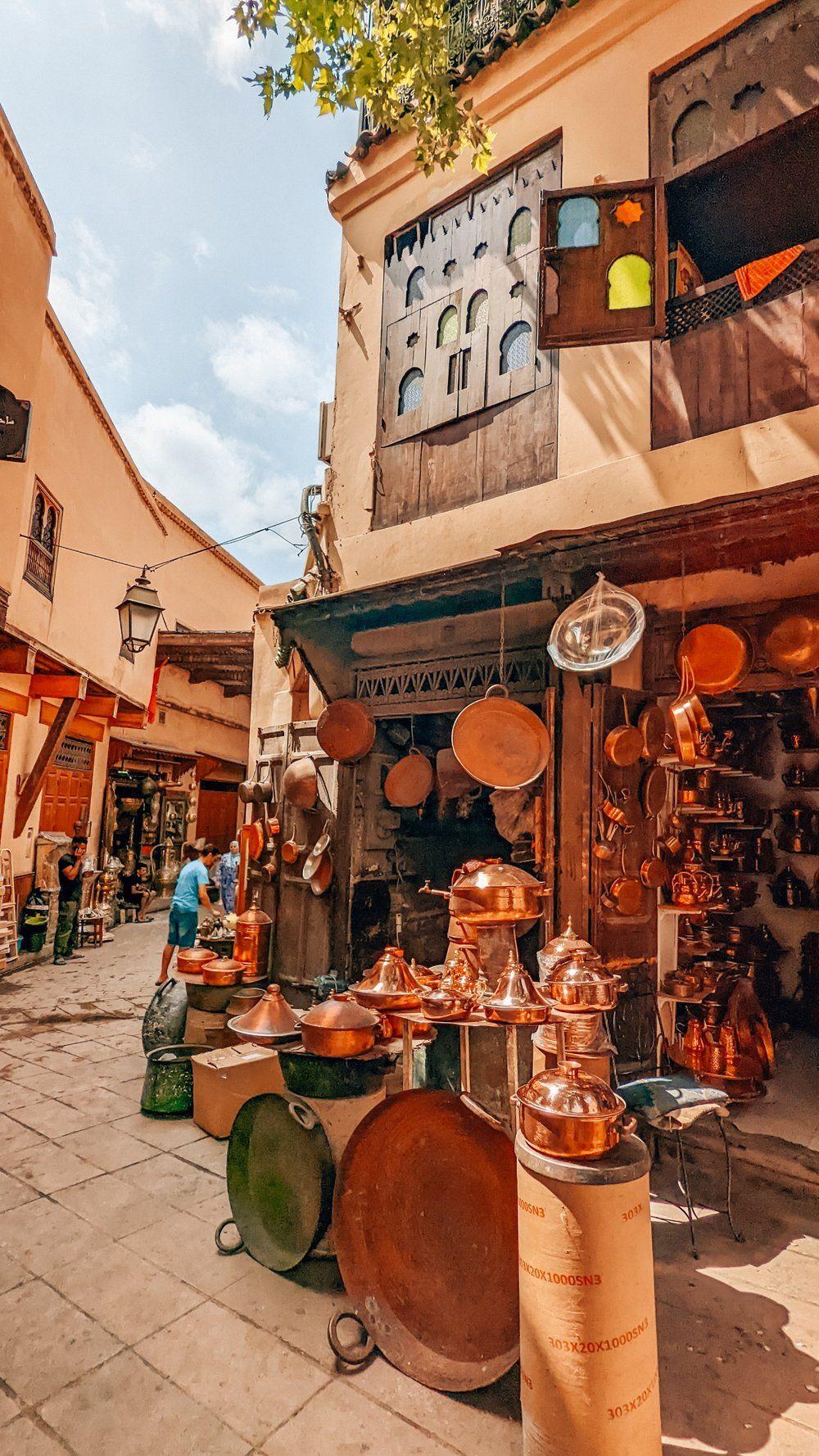
Fes is organised around trades, and the most interesting hours we spend here are in the workshops: the brass hammerers of Place Seffarine, working in the open; weavers at looms in rooms off the main lanes; and the ceramic and zellige workshops at Ain Nokbi outside the walls, where the famous blue Fassi pottery is made and tile is still cut by hand with a small hammer.
A day out: Volubilis and Moulay Idriss
An hour west of Fes, Volubilis is the best-preserved Roman city in Morocco, with mosaics still in the floors they were laid in. Above it sits Moulay Idriss Zerhoun, a whitewashed pilgrimage town on two hills. Meknes, the fourth imperial city, fits on the way back.
It is a good third day, though staying in Fes and returning to the parts of the medina you liked is an equally defensible choice.
Ready to see it for yourself?
Our three-day Fes experience puts a licensed guide on the first day, the crafts on the second, and leaves the third for Volubilis or a slower return to the medina.
Tell us your dates and we will shape an itinerary around what you have just read.