Tanger-Tetouan-Al Hoceima · Rif
Chefchaouen
The blue town in the Rif mountains.
- Best time to visit
- April to June and September to October. Winters are wet and cool.
- Ideal for
- Photography, walking, quiet days, mountain air
Introduction
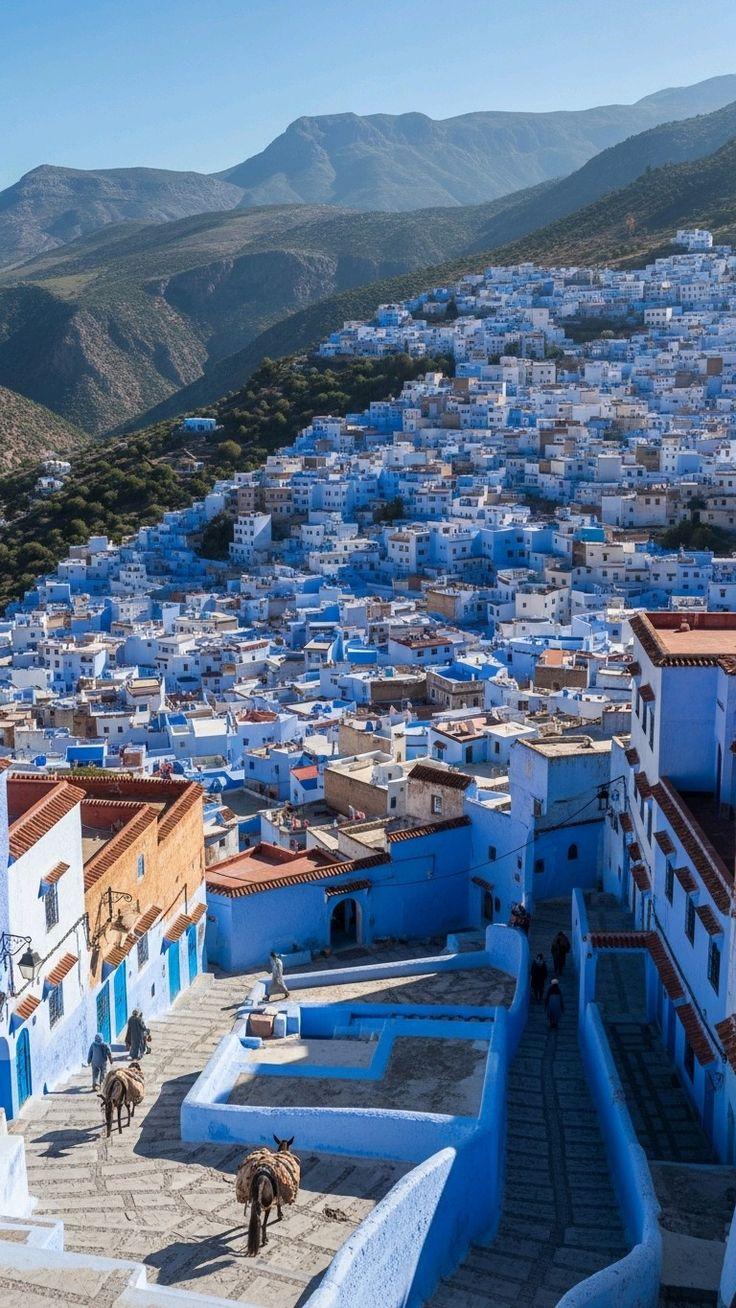
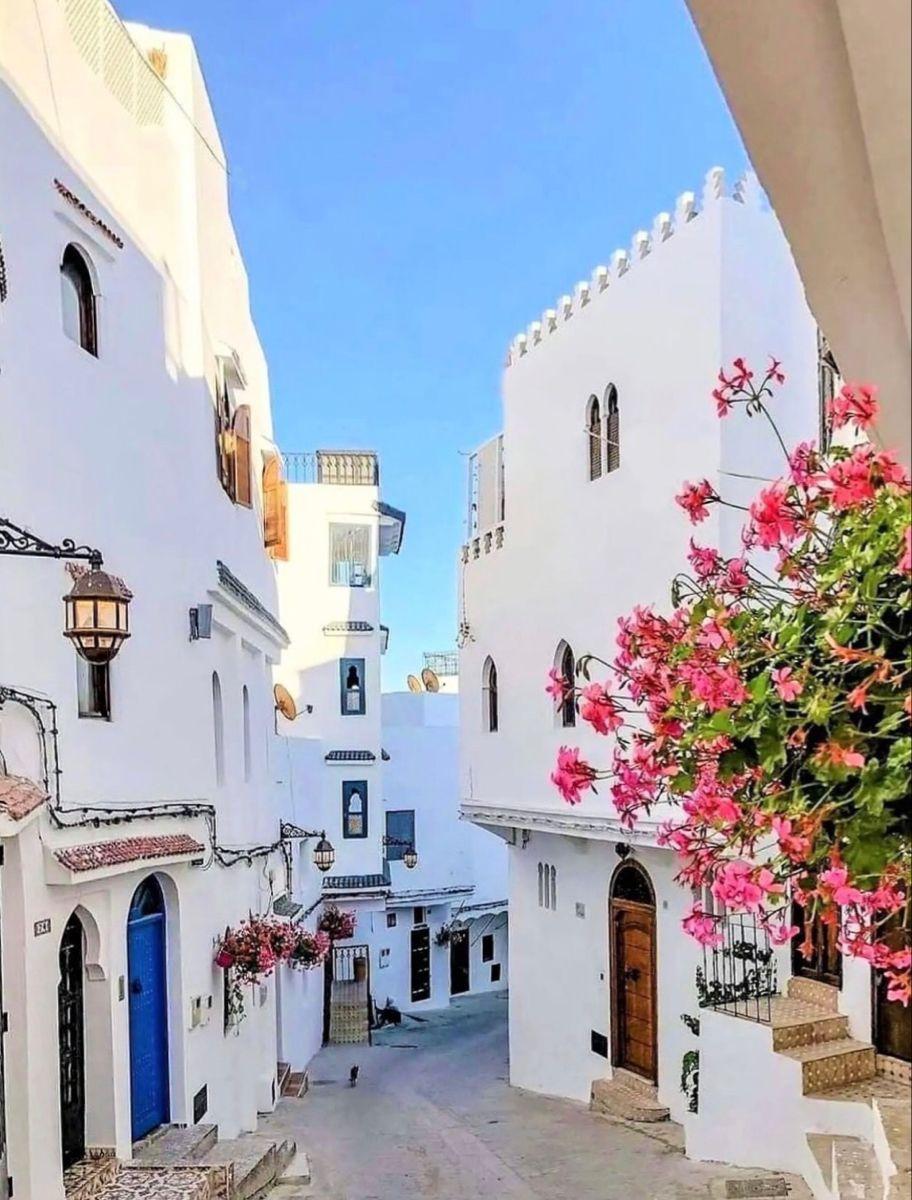
Chefchaouen sits at around 600 metres in the Rif mountains, and its medina is painted, wall to wall, in every shade of blue. The town was founded in 1471 and took in Muslims and Jews expelled from Spain, which is visible in the architecture — tiled roofs and whitewash that look more Andalusian than Moroccan.
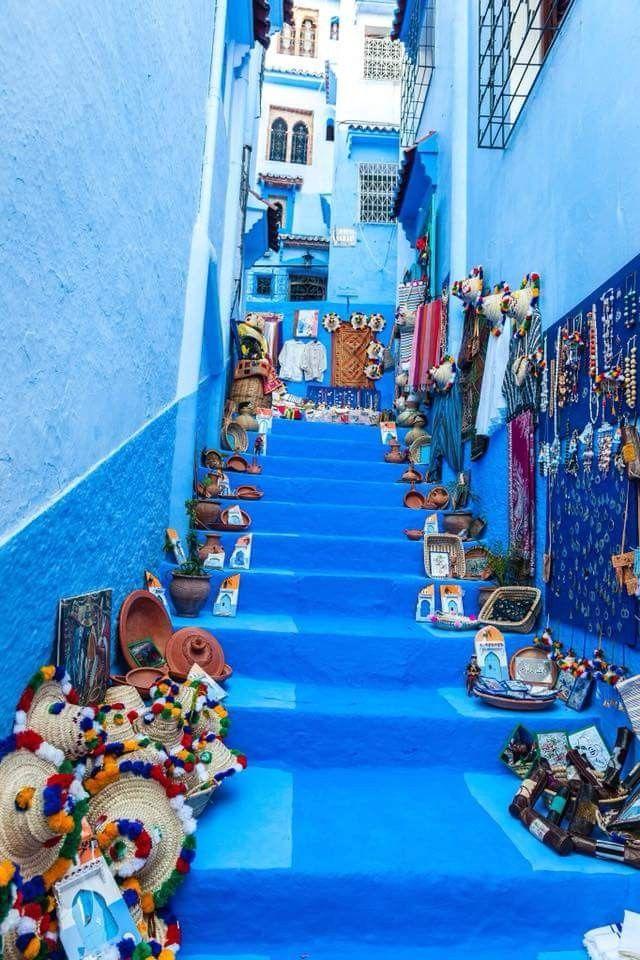
The blue is the reason most people come. Its origins are disputed — a Jewish tradition, a way of repelling mosquitoes, a decision that simply caught on — and nobody in town agrees. What is not disputed is the effect: the light bounces between the walls and the whole medina glows.
Why visit
- 01
It is one of the most photogenic towns in the world, and small enough to walk end to end in an hour.
- 02
The pace is completely different from Fes or Marrakech — no hassle, no traffic, mountain air.
- 03
The Rif setting gives you real hiking straight out of the medina gate.
Things to see
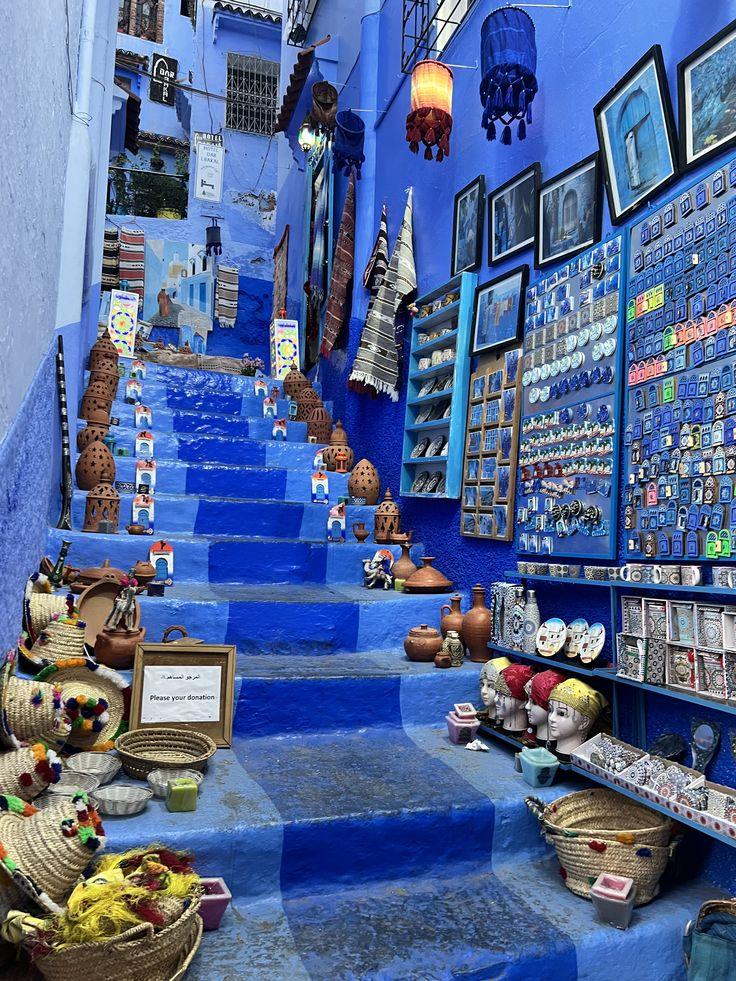
- The blue medina and its stepped lanes
- Plaza Uta el-Hammam and the kasbah
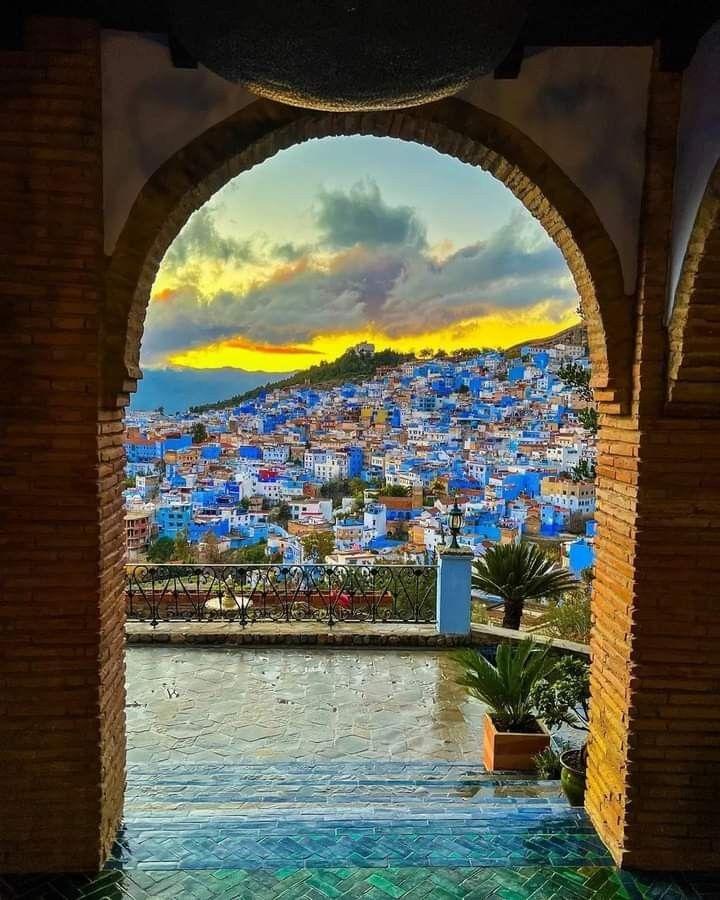
- The Spanish Mosque on the hill, for the sunset view
- The Ras el-Maa spring where the town washes its clothes
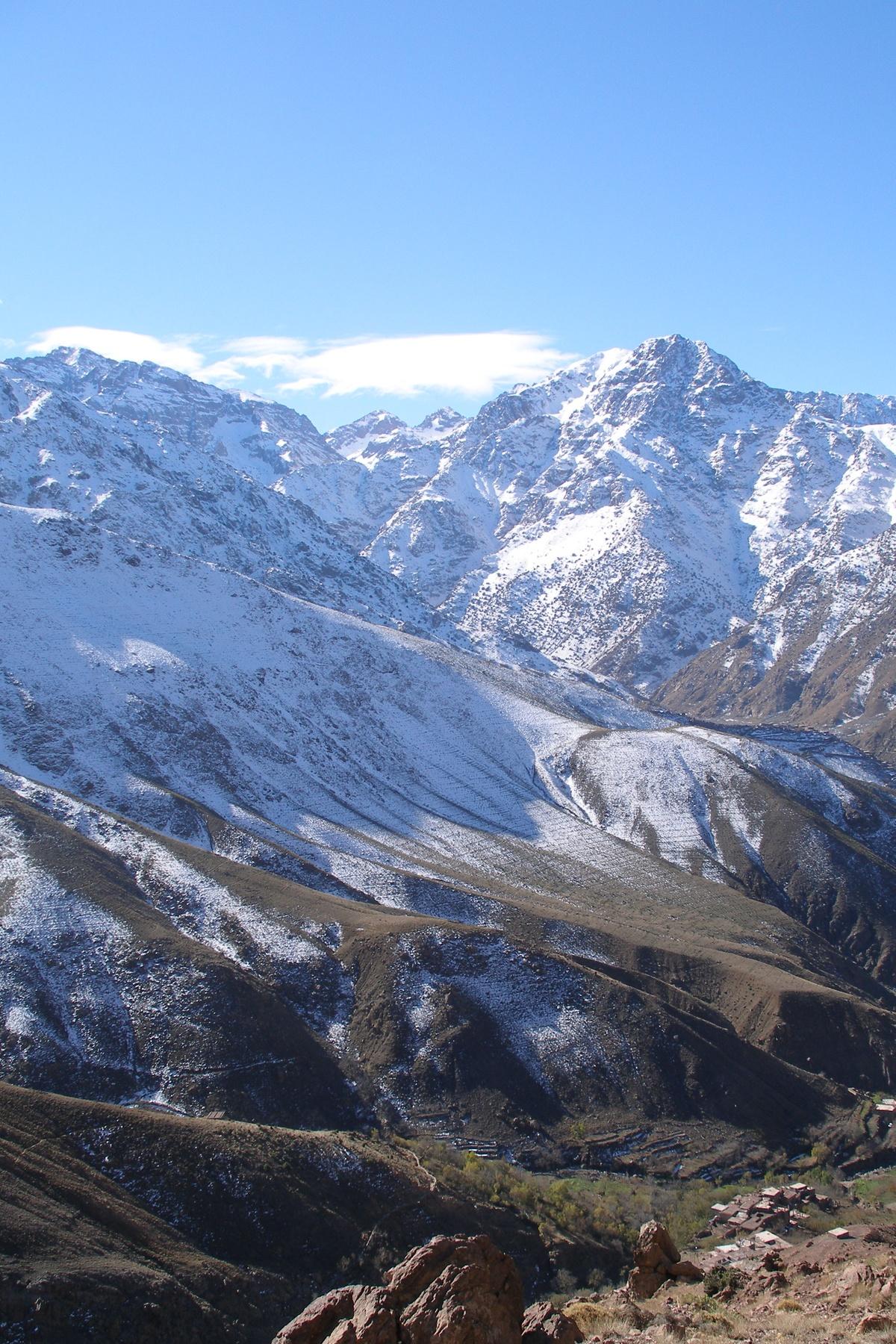
- The Rif mountains and Talassemtane National Park
Things to do
- Walk the medina early, before the day visitors arrive
- Climb to the Spanish Mosque for sunset
- Hike to the Akchour waterfalls and God's Bridge
- Buy the wool blankets and rugs woven in the Rif
- Sit in Plaza Uta el-Hammam for as long as you like
Local experiences
- Goat cheese made in the surrounding villages
- The blue seen at eight in the morning, when it is deepest
- Wool being dyed and woven in a workshop
- The town from the Spanish Mosque as the light goes
Food
Food
Rif cooking is mountain food with a Spanish accent. Goat cheese is a local specialty, unusual in Morocco. Expect bissara — a thick fava bean soup eaten at breakfast with olive oil and cumin — grilled meats, and honey and cheese from the surrounding hills.
Culture
Culture
Chefchaouen was closed to non-Muslims until 1920, which is part of why it stayed so intact. The Andalusian inheritance is strong — in the architecture, in the language, in the crafts — and the Rif has its own Amazigh identity distinct from the Atlas and the south.
Best highlights
- 01
The blue medina at dawn
- 02
The Spanish Mosque at sunset
- 03
Akchour waterfalls
- 04
Rif wool weaving
Popular Destinations
Photo gallery
Our Experiences
Experiences that include this destination
Popular Destinations
Explore other destinations
Start Planning
Your Morocco starts with a message
Tell us your dates and what you hope to see. We will send back a route that actually works — realistic drives, real places, and time to enjoy them.